
The Offsite Shift Is Here: Built and Wesfarmers Back $250m WA Modular Factory

Built and Wesfarmers Launch $250 Million Modular Housing Venture in Western Australia
The modular and offsite construction sector in Australia continues to accelerate, with major industry players now making significant long-term investments into industrialised housing delivery.
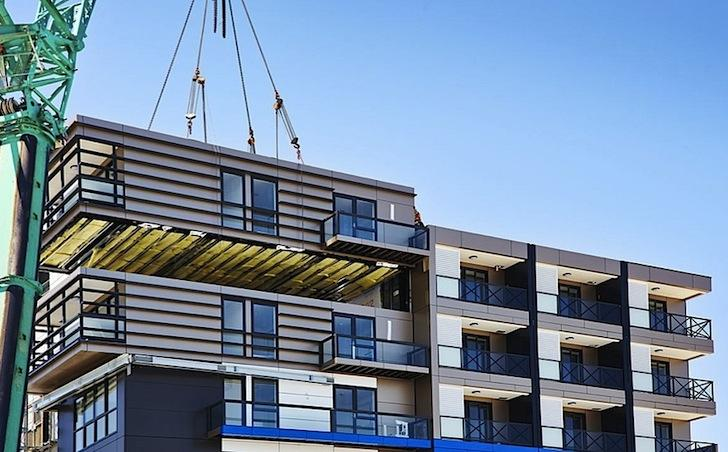
Built Group and Wesfarmers have announced the formation of Built Living, a new 50:50 joint venture that will establish a $250-million offsite manufacturing facility within the Neerabup Automation and Robotics Precinct in Perth, Western Australia.
The project is backed by:
an initial AUD$100 million equity injection from Wesfarmers,
long-term government-supported land access,
and a manufacturing strategy focused on large-scale apartment production using modular and precast methodologies.
The facility is expected to produce more than 2,000 apartments annually, with first production targeted for 2028.
The announcement is another major signal that modular construction is no longer being viewed as a niche alternative delivery method — it is increasingly becoming part of mainstream construction strategy across Australia.
Why This Matters
For years, modular construction discussions in Australia largely focused on:
temporary accommodation,
mining camps,
remote housing,
and small-scale prefabricated dwellings.
That conversation is now changing rapidly.
When major Tier-1 builders and institutional groups begin investing directly into advanced manufacturing facilities, the industry moves into a different phase — one focused on:
industrialised construction,
scalable housing delivery,
supply chain control,
workforce productivity,
and long-term manufacturing capability.
This is particularly important in Western Australia, where:
housing shortages,
labour constraints,
rising construction costs,
and project delivery delays continue to place pressure on the residential sector.
The Shift Toward Industrialised Construction
Built Living’s strategy appears heavily aligned with:
Design for Manufacture and Assembly (DfMA),
repeatable apartment typologies,
offsite manufacturing,
and factory-controlled construction systems.
The venture has publicly stated targets of:
up to 20% lower construction costs,
and approximately 50% faster delivery compared with traditional construction methods.
While actual cost savings in modular construction can vary significantly depending on project type, scale, logistics, and procurement structure, the broader industry trend is clear:
Speed, certainty, and scalability are now becoming the primary drivers of modular adoption.
Developers and governments are increasingly focused on:
reducing delivery risk,
improving construction predictability,
shortening project timelines,
and addressing labour shortages through industrialised production systems.

MCM Co. Perspective
At MCM Co., we believe this announcement reinforces a broader global trend:
the convergence of construction, manufacturing, logistics, and technology.
The future of modular construction will not simply be about prefabricated buildings — it will be about:
integrated delivery systems,
digital manufacturing,
QA/QC traceability,
supply chain coordination,
and scalable production capability.
The Built Living announcement demonstrates that major institutional groups are now actively positioning themselves around this future.
The offsite conversation in Australia has clearly shifted from:
“if modular”
to


Comments